
Have you ever felt a stiff neck or constant discomfort after hours of looking down at your phone or computer? That nagging pain might be more than just a minor annoyance—it could be something called tech neck.
Understanding what tech neck is and how it affects your body is the first step to finding relief. Keep reading to discover how this modern problem might be impacting your health and what simple changes you can make to feel better every day.

Credit: www.piedmontchiro.com
What Is Tech Neck
Tech neck is a common condition affecting many people today. It happens from bending the neck forward for long periods. This posture puts extra strain on the neck muscles and spine.
Many use smartphones, tablets, and computers daily. Holding these devices at a low angle causes the head to lean forward. This unnatural position leads to pain and stiffness in the neck and shoulders.
What Causes Tech Neck?
Tech neck results from poor posture while using digital devices. The head weighs about 10-12 pounds, but leaning forward increases the load. Every inch the head moves forward adds more pressure on the neck muscles.
People often tilt their heads down to look at screens. This position strains the muscles, ligaments, and discs in the neck. Over time, this strain causes discomfort and injury.
Common Symptoms Of Tech Neck
- Neck pain and stiffness
- Shoulder tightness
- Headaches
- Reduced neck movement
- Muscle spasms
- Numbness or tingling in the arms
Who Is At Risk?
Anyone using digital devices frequently can develop tech neck. Students, office workers, and gamers are common sufferers. Poor ergonomic setups increase the risk. People who sit for long hours without breaks also face higher chances.
Why Tech Neck Matters
Ignoring tech neck can lead to chronic pain and long-term damage. It may cause disc problems and nerve compression. Early care helps avoid serious health issues. Correcting posture and taking breaks can ease symptoms.
Common Causes
Tech neck is a growing problem caused by modern habits. It happens when the neck bends forward too much. This puts pressure on the spine and muscles. Understanding what causes tech neck helps prevent pain and stiffness.
Prolonged Device Use
Spending long hours looking down at phones or tablets strains the neck. The head weighs more when tilted forward. Holding this position for a long time causes muscle fatigue. Texting, gaming, and browsing all add to the problem.
Poor Posture
Slouching or leaning forward increases neck stress. Many people sit with rounded shoulders and heads pushed ahead. This posture weakens neck muscles and tightens others. Poor posture becomes a habit that worsens tech neck symptoms.
Workplace Setup
Incorrect desk and screen height forces the neck into awkward positions. A low monitor or laptop screen causes constant downward gazing. Chairs without proper support affect spine alignment. These factors make neck pain more common.
Lifestyle Factors
Lack of exercise weakens muscles that support the neck. Stress causes muscle tension and stiffness. Carrying heavy bags on one shoulder also adds strain. Poor sleep positions prevent proper neck rest and healing.
Recognizing Symptoms
Recognizing the symptoms of tech neck early can save you from long-term discomfort and health issues. The signs often start subtly but can worsen if ignored. Understanding these symptoms helps you take timely action to protect your neck and overall posture.
Neck Pain And Stiffness
You might feel a persistent ache or sharp pain in your neck after hours of looking down at your phone or computer. Stiffness can make it hard to turn your head fully, especially in the morning or after long periods of screen time.
Have you noticed your neck feeling tighter as the day goes on? This is a common sign that your muscles are strained and need relief.
Headaches
Headaches linked to tech neck often start at the base of your skull and spread toward your forehead. These tension headaches happen because your neck muscles are overworked and pulling on nerves.
If you find your headaches worsen after screen use, it might be time to check your posture or take breaks more often.
Shoulder Discomfort
Shoulders can feel sore or tense due to the forward head posture typical of tech neck. This discomfort may feel like a dull ache or sharp pain between your shoulder blades.
Do you often shrug your shoulders or feel tightness after working on devices? That’s your body signaling it needs better alignment and movement.
Reduced Mobility
As tech neck progresses, you might notice a limited range of motion in your neck and shoulders. Simple actions like looking over your shoulder or tilting your head can become challenging.
Don’t wait until movement feels restricted. Early stretching and posture adjustment can keep your neck flexible and pain-free.

Credit: lifespringchiro.com
Effective Solutions
Tech neck causes pain and stiffness in the neck and shoulders. It results from looking down at screens for long times. Solutions focus on reducing strain and improving posture. Simple changes can bring big relief. Here are effective ways to ease tech neck symptoms.
Posture Correction
Keep your head aligned with your spine. Avoid leaning forward or slouching. Sit with your back straight and shoulders relaxed. Use a mirror or app to check posture often. Good posture prevents extra pressure on neck muscles.
Ergonomic Adjustments
Place screens at eye level to avoid bending your neck. Use chairs that support your lower back. Adjust desk height so your elbows stay at 90 degrees. Use a separate keyboard and mouse if needed. Proper setup reduces neck and shoulder strain.
Stretching And Exercises
- Gently tilt your head side to side and forward.
- Roll your shoulders backward and forward.
- Stretch your chest muscles to open the front body.
- Strengthen neck and upper back muscles with light weights or resistance bands.
Regular movement keeps muscles flexible and strong. It eases stiffness and improves blood flow.
Regular Breaks
Take short breaks every 20 to 30 minutes. Stand up and move around. Stretch your neck and shoulders during breaks. These pauses reduce muscle fatigue and eye strain. Breaks help reset posture and prevent pain buildup.
Professional Treatments
Physical therapy offers personalized exercises and manual therapy. Chiropractors can adjust spine alignment. Massage therapy relaxes tight muscles. Consult a healthcare provider if pain persists. Early care prevents worsening of tech neck.
Preventive Measures
Preventing tech neck requires small but consistent changes. These changes help reduce strain on your neck and shoulders. Simple habits and proper setup protect your body from pain. Start by adjusting your device use and workspace. Add healthy habits to keep your muscles strong and flexible.
Device Usage Tips
- Hold devices at eye level to avoid bending your neck.
- Take breaks every 20 minutes to rest your eyes and neck.
- Use voice commands to reduce screen time.
- Avoid long calls while looking down at your phone.
- Switch hands when holding devices to balance muscle use.
Workstation Setup
- Adjust your chair so your feet rest flat on the floor.
- Keep your computer screen at eye height, about 20 inches away.
- Use a supportive chair that keeps your spine straight.
- Place your keyboard and mouse close to avoid reaching.
- Keep your shoulders relaxed and elbows close to your body.
Healthy Habits
- Stretch your neck and shoulders daily to keep muscles flexible.
- Practice good posture by sitting and standing tall.
- Strengthen your upper back with simple exercises.
- Use heat or cold packs to relieve muscle tension.
- Stay hydrated to support muscle health.
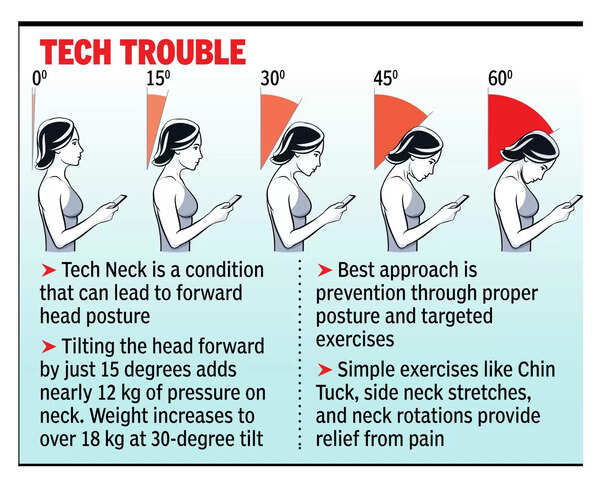
Credit: timesofindia.indiatimes.com
Frequently Asked Questions
What Causes Tech Neck Symptoms?
Tech Neck is caused by prolonged looking down at phones, tablets, or computers. This posture strains neck muscles and spine, leading to pain and stiffness.
How Can I Prevent Tech Neck Pain?
Maintain good posture by holding devices at eye level. Take frequent breaks, stretch your neck, and strengthen neck muscles regularly.
What Are Common Symptoms Of Tech Neck?
Common symptoms include neck pain, stiffness, headaches, and shoulder discomfort. Over time, poor posture may lead to spinal misalignment and nerve issues.
Is Tech Neck Reversible With Exercises?
Yes, targeted neck and shoulder exercises can relieve pain and improve posture. Consistency in stretching and strengthening helps reverse Tech Neck effects.
Conclusion
Tech neck causes pain and stiffness in your neck and shoulders. It happens from looking down at phones or computers too long. You can ease it by taking breaks and adjusting your posture. Simple exercises help keep your neck strong and flexible.
Staying aware of your body position is important. Small changes make a big difference over time. Protect your neck to feel better every day.