What Does Tech Neck Look Like: Warning Signs & Prevention Tips
Have you ever noticed a dull ache in your neck after hours of looking down at your phone or laptop? That discomfort might be more than just tired muscles—it could be a sign of tech neck.
But what does tech neck actually look like? Understanding its signs can help you spot the problem early and take steps to prevent long-term damage. Keep reading to discover the common symptoms and visual cues of tech neck so you can protect your posture and feel better every day.
Tech Neck Symptoms
Tech neck symptoms show up in different ways. These signs warn about damage from poor posture. Recognizing symptoms early helps prevent serious issues.
Physical Discomfort
Pain is common in the neck and shoulders. Stiffness often follows long hours of looking down. Some feel sharp or dull aches. Headaches can also occur from tight muscles. Numbness or tingling may spread to arms and hands.
Postural Changes
Tech neck causes the head to lean forward. The upper back may round more than usual. Shoulders often slump inward. These shifts strain muscles and joints. Over time, the spine’s natural curve can flatten or bend.
Skin Concerns
Skin on the neck shows horizontal lines or creases. These lines deepen with repeated bending. The skin may look loose or saggy. Some notice redness or irritation from constant friction. Early skin aging is a common effect of tech neck.
Credit: lifespringchiro.com
Prevention Strategies
Preventing tech neck is essential to avoid long-term pain and posture problems. Small changes in your daily habits can make a huge difference. Let’s look at practical ways you can protect your neck while using your devices.
Ergonomic Adjustments
Adjust your workspace to keep screens at eye level. This reduces the need to bend your neck forward. If you use a laptop, try a stand or external keyboard to raise the screen.
Check your chair height and posture. Your feet should rest flat on the floor, and your back should be supported. This setup helps maintain a neutral spine position.
Have you considered how your phone habits affect your neck? Holding your phone at eye level instead of looking down can ease strain significantly.
Regular Breaks
Taking breaks is crucial. Every 20-30 minutes, look away from your screen and stretch your neck. This simple act can prevent tension from building up.
Set reminders if you tend to lose track of time. Even short breaks help blood flow and reduce stiffness. Ask yourself: When was the last time you gave your neck a rest?
Exercise Routines
Strengthening and stretching neck muscles can ease discomfort and improve posture. Try gentle neck stretches like tilting your head side to side or rotating it slowly.
Incorporate exercises that target your upper back and shoulders. These areas support your neck and help keep it aligned. Yoga poses or simple resistance band workouts can be very effective.
Have you noticed how much better your neck feels after moving regularly? Making exercise part of your routine is a powerful way to prevent tech neck.
Treatment Options
Treating tech neck requires a mix of professional care and simple daily habits. These options help reduce pain and improve posture. Early action can prevent long-term damage and discomfort.
Physical Therapy
Physical therapy focuses on stretching and strengthening neck muscles. Therapists teach exercises to improve posture and reduce strain. Treatment often includes gentle movements to restore neck mobility. Regular sessions help ease pain and prevent future issues.
Chiropractic Care
Chiropractors adjust the spine to relieve tension and improve alignment. These adjustments can reduce neck stiffness and headaches. Care also includes advice on posture and ergonomics. Many find relief through consistent chiropractic visits.
Home Remedies
- Use heat or cold packs to ease muscle pain.
- Maintain good posture while using devices.
- Take frequent breaks from screens to stretch.
- Sleep on a supportive pillow to align the neck.
- Practice gentle neck stretches daily.
Simple changes at home support healing and comfort. Consistency is key to reducing tech neck symptoms.
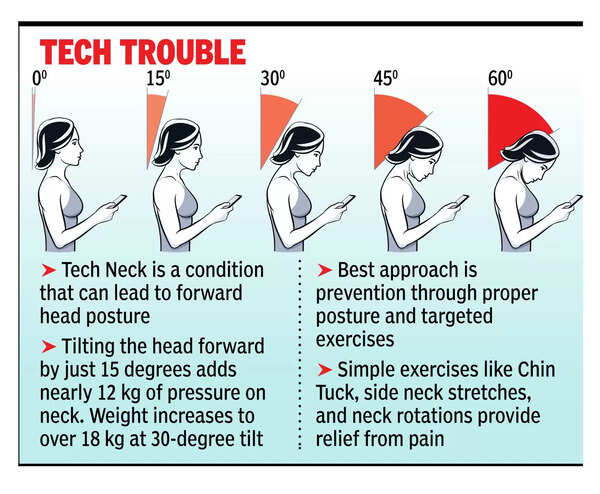
Credit: timesofindia.indiatimes.com
Long-term Effects
Tech neck does more than cause temporary discomfort. Over time, it leads to serious health and appearance problems. These long-term effects can affect daily life and overall well-being. Understanding these risks helps in taking better care of the neck and spine.
Chronic Pain Risks
Tech neck often results in persistent pain in the neck, shoulders, and upper back. Continuous strain on muscles and ligaments causes stiffness and soreness. Without relief, this pain can worsen and become chronic. It may limit movement and reduce quality of life.
Postural Deformities
Long-term poor posture from tech neck changes the spine’s natural curve. This can cause a forward head posture and rounded shoulders. Over time, these changes become structural and harder to fix. Postural deformities may lead to headaches and breathing difficulties.
Skin Aging
Tech neck also affects skin health. Constant bending creates horizontal lines and wrinkles on the neck. These lines deepen with time, making the skin look older. Poor blood flow and tension add to skin sagging and loss of elasticity.
Tech Neck Myths
Tech neck has become a buzzword, but many ideas around it are tangled in myths. These myths can confuse you about what tech neck really looks like and how it affects your body. Let’s clear up some common misunderstandings so you can recognize the signs accurately and take better care of your posture.
Common Misconceptions
One big myth is that tech neck only causes wrinkles or cosmetic issues around your neck. While wrinkles are a sign, the problem goes deeper, affecting muscles, joints, and even nerves. Another false belief is that tech neck appears only after years of device use. In reality, poor posture can cause discomfort and early symptoms much sooner.
Some people think tech neck is a condition that only affects young people glued to screens. Actually, anyone who spends long hours looking down—whether for reading, crafts, or device use—can experience these symptoms. Have you noticed stiffness or pain after a long day of looking down? That might be an early warning.
Scientific Insights
Science shows that tech neck results from sustained forward head posture, which increases pressure on your cervical spine. Research indicates that every inch your head moves forward adds about 10 pounds of pressure on your neck muscles. This explains why even short periods of poor posture can cause strain.
Studies also reveal that tech neck can contribute to headaches, shoulder pain, and reduced lung capacity due to compressed chest muscles. It’s not just about the neck—it’s a chain reaction affecting your entire upper body. Understanding this helps you see why simple posture corrections can make a big difference.
So, what small change can you make today to reduce tech neck symptoms? Maybe it’s raising your screen to eye level or setting reminders to stretch. Your body will thank you for those little adjustments.
Frequently Asked Questions
What Are The Visible Signs Of Tech Neck?
Tech neck shows as horizontal lines and wrinkles on the neck. Skin may appear saggy and creased due to constant downward head posture. Over time, these changes become more noticeable, causing premature aging and discomfort.
How Does Tech Neck Affect Posture?
Tech neck causes the head to lean forward, straining neck muscles. This poor posture leads to neck and shoulder pain. It can also cause spinal misalignment, affecting overall body balance and comfort.
Can Tech Neck Cause Long-term Damage?
Yes, prolonged tech neck can lead to chronic pain and stiffness. It may cause disc degeneration and nerve compression. Early correction and exercises can prevent serious long-term effects and improve neck health.
Who Is Most Prone To Developing Tech Neck?
People frequently using smartphones, tablets, or laptops are most at risk. Office workers and students who look down for long hours often develop tech neck. Poor ergonomics and lack of posture awareness increase vulnerability.
Conclusion
Tech neck shows as pain and stiffness in the neck area. It often comes from bending your head down too long. You might see lines or wrinkles on your neck. Poor posture causes muscle strain and discomfort. Fixing your tech neck means changing habits.
Try to keep your screen at eye level. Take breaks and stretch your neck often. Small changes can help you feel better fast. Stay aware of your posture every day. Your neck health matters for your overall well-being.

Similar Posts