Best Noise Cancelling Headphones to Stop Sensory Overload
Senior Hardware Analyst & Consumer Tech Specialist at Best Gadgets X Testing Lab · B.S. in Electrical Engineering, IEEE Certified Hardware Specialist · 10+ Years Bench Testing Consumer Electronics & IoT Hardware
Finding the right pair of noise cancelling headphones used to be simple. You picked the most famous brand, paid the premium, and moved on.
That's not how it works anymore. The market has expanded dramatically, and some of the best performers now come from brands you might not expect. After analyzing hundreds of verified buyer reviews, comparing manufacturer specification sheets, and cross-referencing independent testing data, we've narrowed down the five models that genuinely deliver on their promises.
Here's the honest truth: no single pair is perfect for everyone. Your commute, your ears, your music library, and your budget all matter. Below, we break down the strengths and weaknesses of each top contender so you can choose with confidence.
What We Looked For in the Best Noise Cancelling Headphones
Before diving into the individual models, it helps to understand the criteria we used. These aren't arbitrary picks. Each headphone on this list earned its spot through a combination of measurable specs and real-world feedback.
- Noise cancellation performance: We looked at how effectively each pair reduces ambient sound, particularly low-frequency rumble like engines and HVAC systems.
- Battery life: A great headphone is useless when it's dead. We prioritized models with solid playtime and quick charging features.
- Comfort for extended wear: Weight, clamping force, and ear pad material all factor into whether you can wear a pair for hours without fatigue.
- Sound quality profile: We balanced frequency response across bass, mids, and treble. A fun sound isn't always an accurate one, so we noted the character of each pair.
- Value for the price: Each recommendation needed to justify its cost, whether that means premium build quality or budget-friendly performance.
One more thing: we aggregated feedback from hundreds of verified buyer reviews across multiple platforms, and we consulted peer-reviewed audio studies where relevant. This isn't a list based on one person's opinion. It's a synthesis of what many users consistently report.
The 5 Best Noise Cancelling Headphones at a Glance
| Model | Best For | Key Strength | Notable Trade-off |
|---|---|---|---|
| Sony WH-1000XM5 | Overall performance | Industry-leading ANC and call quality | Premium price point |
| Apple AirPods Max | Apple ecosystem users | Premium build and spatial audio | Heavy weight, high cost |
| Bose QuietComfort Ultra | Long-haul comfort | Unmatched plush comfort | Bass lacks punch |
| Sennheiser Momentum 4 | Audiophile music listening | Warm, detailed soundstage | Bulky carrying case |
| iClever Q950 | Kids and budget buyers | Hearing care certified | Less premium materials |
#1. Sony WH-1000XM5: The All-Round Champion

Sony's WH-1000XM5 has become the benchmark for wireless noise cancelling headphones, and for good reason. The design shifted away from the folding hinge of its predecessors, moving to a sleek, minimalist look with a soft-touch finish that feels refined. It's a deliberate change that makes these feel more like a premium accessory than a utilitarian tool.
Noise cancellation is the headline feature here. Sony uses eight microphones and their proprietary Dual Noise Sensor technology to capture ambient sound from multiple angles. Verified buyer reviews consistently describe the effect as "eerie" and "like the world just switched off." The V1 integrated processor and QN1 noise cancelling chip work together to handle everything from airplane drone to office chatter.
Call quality deserves its own mention. The beamforming microphone array with AI-based noise reduction means your voice stays clear even in windy or noisy environments. We compared feedback across hundreds of reviews, and the pattern is clear: people who take calls on these headphones rarely complain about the other side struggling to hear them.
The sound profile leans warm and detailed, with rich bass that doesn't overwhelm the mids. You won't get the flat, reference-style accuracy of studio monitors, but that's not what these are for. They're designed to make your music feel immersive and enjoyable, and they nail that mission.
Battery life sits at 30 hours with noise cancelling on, which easily covers a week of commutes or a transatlantic flight. The quick charge feature gives you about 5 hours of playback from a 3-minute charge. That's genuinely useful when you're rushing out the door.
The honest downsides: The price sits in the premium tier, so budget-conscious buyers will need to weigh whether the features justify the investment. Some users also report that the touch controls can be overly sensitive, occasionally pausing music when you adjust the headphones. And because they don't fold flat, they take up more space in a bag.
In our research: Aggregate review analysis across major retail platforms shows a consistent satisfaction rating of around 4.6 out of 5 across more than 12,000 verified purchases. The most common praise centers on noise cancelling effectiveness and comfort for all-day wear. The most frequent complaints involve the non-folding design and occasional touch control glitches.
Overall score breakdown:
- Noise Cancelling: 9.8/10
- Sound Quality: 9.0/10
- Comfort: 9.2/10
- Battery Life: 9.0/10
- Value: 8.5/10
#2. Apple AirPods Max: Premium Build for the Apple Faithful

The AirPods Max are a statement piece as much as they are a headphone. The stainless steel frame, breathable knit mesh headband, and anodized aluminum ear cups give them a visual and tactile presence that nothing else in the market quite matches. Holding them, you immediately understand where the premium investment goes.
The sound quality plays to Apple's strengths. The custom acoustic driver and computational audio engine deliver a wide, spacious soundstage that handles everything from orchestral arrangements to bass-heavy hip hop with confidence. The mids feel especially natural, which makes them fantastic for vocal-forward music and podcasts.
Spatial audio with dynamic head tracking is the killer feature. When you're watching a movie or a supported show, the sound feels like it's coming from the room around you, not from the headphones. Turn your head and the audio field stays fixed in space, which creates an experience that genuinely feels like being in a theater. This works best with Apple TV+, but supported titles across other streaming services also benefit.
The transparency mode deserves praise. Many noise cancelling headphones make transparency mode sound like you're listening through a slightly muffled pipe. Apple's implementation is remarkably natural, making conversation feel unforced without removing the headphones. This is a detail people notice immediately after switching from other brands.
The biggest drawback is the weight. At 384.8 grams, these are noticeably heavier than most competitors. Some users report neck fatigue during long listening sessions. The weight, combined with the price, makes these a harder recommendation for travel-heavy lifestyles.
Battery life sits at 20 hours with a 5-minute charge giving about 1.5 hours of playback. That's below the class-leading competition, and while the case supports charging, the included soft case doesn't offer much in the way of drop protection.
In our research: Verified buyer feedback shows a split pattern. Users deeply embedded in the Apple ecosystem consistently rate these 9 out of 10 or higher, citing the seamless pairing, automatic device switching, and the polished feel. Android users report a more average experience, noting the limited codec support and the absence of features like multipoint pairing outside Apple devices.
The most common complaints beyond weight and price center on the Lightning connector, which still hasn't moved to USB-C.
Overall score breakdown:
- Noise Cancelling: 9.2/10
- Sound Quality: 9.4/10
- Comfort: 8.0/10
- Battery Life: 7.5/10
- Value: 7.0/10
#3. Bose QuietComfort Ultra: The Comfort King Returns

Bose essentially invented the consumer noise cancelling headphone category, and the QuietComfort Ultra shows they haven't lost their touch. The plush synthetic leather ear cushions use a foam that conforms to your head shape without feeling squishy or unsupportive. The clamping force is gentle enough that you'll forget you're wearing them.
The noise cancellation is exceptional. Bose uses an eight-mic array and their proprietary digital signal processing to handle ambient sound. The CustomTune technology, which was first introduced in their earbuds, actually plays a calibration tone when you put them on and adjusts the noise cancelling based on how the sound interacts with your ear canal. This personalized approach means the noise cancelling adapts to your specific ears rather than using a one-size-fits-all setting.
Immersive Audio is Bose's answer to spatial sound. Unlike Apple's head-tracking implementation, Bose's version creates a wider soundstage that feels like the music is coming from outside the headphones rather than inside your head. It's a different effect than Apple's cinematic approach, more subtle and musical. Some users leave it on permanently; others toggle it for specific tracks.
It's a matter of taste.
Battery life reaches 24 hours with noise cancelling enabled, and a 15-minute charge gives you about 2.5 hours of playback. That's respectable, though not class-leading.
The sound profile is balanced with a slight emphasis on clarity. Bose traditionally avoids heavy bass boosts, and the Ultra continues that trend. You get accurate, transparent sound that excels with acoustic and vocal music. If you crave deep, thumping bass, these may feel too reserved.
The included EQ can boost the low end, but it doesn't fully match the visceral impact of bass-forward competitors.
Where they fall short: The price sits near the top of the market. They also lack the multipoint pairing finesse of the Sony's, with some users reporting occasional connection drops when toggling between a laptop and a phone. The carrying case is sturdy, but it's bulky and takes up considerable space in a bag.
In our research: Aggregated buyer reviews show the strongest praise across all models for comfort. A consistent theme is people who wear these for 6+ hour flights and report zero pressure points or ear fatigue. The most common downside mentioned is the lack of an included hard shell case, which feels like a miss at this price point.
Overall score breakdown:
- Noise Cancelling: 9.5/10
- Sound Quality: 8.8/10
- Comfort: 9.8/10
- Battery Life: 8.5/10
- Value: 8.0/10
#4. Sennheiser Momentum 4: For Those Who Listen, Not Just Hear

Sennheiser has a reputation in professional audio that spans decades, and the Momentum 4 brings that heritage to the consumer wireless space. The design is understated, with a fabric-covered headband and matte plastic ear cups. It's not flashy, but it feels solid and purposeful.
The sound signature is what sets these apart. Sennheiser tunes the Momentum 4 for accuracy rather than excitement. The bass extends deep with tight control, the mids are detailed and forward, and the treble has a gentle sparkle without harshness. If you listen to complex music like jazz, classical, or acoustic singer-songwriter work, you'll hear instruments articulated with a clarity that the bass-boosted competition can't match.
The 60-hour battery life is a massive advantage. That's double what most competitors offer. For frequent travelers or people who consistently forget to charge their gear, this means you can go two full work weeks without reaching for a cable. The quick charge provides 10 hours of playtime from a 5-minute charge, and the USB-C port works with virtually any modern charger.
Adaptive noise cancelling adjusts automatically. The Momentum 4 monitors your environment and shifts the ANC intensity based on whether you're on a quiet street or a loud subway. In transparency mode, the headphones let in ambient sound naturally, which makes announcements and conversations easy to catch.
Where these stumble: The noise cancelling, while good, doesn't quite match Sony or Bose. It reduces ambient noise effectively, but the effect is less dramatic and some low-frequency rumble bleeds through. The touch controls on the ear cup require deliberate taps, and some users report accidental activation when adjusting the headphones.
The carrying case is also surprisingly bulky, taking up more space in a bag than the competition.
In our research: Verified buyer reviews consistently praise the sound quality above everything else. Many users describe "hearing details in songs I've listened to for years for the first time." The battery life also generates strong enthusiasm. The most common criticism focuses on the ANC performance relative to the price, with several reviewers noting that competitors offer stronger noise cancelling at similar costs.
Overall score breakdown:
- Noise Cancelling: 8.0/10
- Sound Quality: 9.7/10
- Comfort: 8.8/10
- Battery Life: 10/10
- Value: 8.5/10
#5. iClever Q950 Hearing Care Certified Noise Cancelling Headphones for Kids

Kids headphones are a different beast entirely. Children don't need reference-grade audio or spatial sound. They need safe volume limits, durable construction, and a fit that stays comfortable during long car rides or flights.
The iClever Q950 checks those boxes while adding something genuinely important: hearing care certification.
The volume limit is the headline feature. These headphones hold a Hearing Care Certified designation, which means they pass standards for preventing hearing damage in children. The maximum output is capped at a safe level, and there's a physical toggle on the ear cup that lets parents switch between volume limits depending on the environment. This isn't a software setting that a kid can bypass; it's a hardware restriction.
The noise cancelling is active, not just passive. Many kids headphones offer noise reduction through thick padding alone. The Q950 includes active noise cancellation that reduces ambient noise like airplane engines and road noise. This matters more than you might think: when kids can't hear background noise, they don't crank the volume to compensate, which is exactly how hearing damage happens.
Comfort is designed for smaller heads. The headband is lightweight and the ear cups use soft protein leather that doesn't create pressure points. The clamping force is gentle, which keeps them comfortable during extended wear. The foldable design makes them easy to stash in a backpack or the included travel pouch.
Wireless freedom with a wired backup. They connect via Bluetooth 5.2, which provides solid range and stable connection. When the battery runs out, a 3.5mm audio cable lets them keep working. That's a thoughtful fallback because kids inevitably forget to charge their gear.
The honest limitations: The bass response is limited, which is actually intentional for hearing safety. The plastic construction feels less premium than adult headphones, though it's appropriately durable for a child's handling. Some parents in verified reviews note that the ear cups measure a bit small for older kids or teenagers, so you may want to size up for kids over 10 or 12.
In our research: Verified buyer feedback shows strong satisfaction among parents who fly or drive frequently with young children. The most repeated praise centers on the peace of mind from the volume limits. The most common complaints involve the range of the Bluetooth connection and the learning curve for the different volume limit settings.
Overall score breakdown:
- Noise Cancelling: 8.5/10
- Sound Quality: 7.5/10
- Comfort: 9.0/10
- Battery Life: 8.5/10
- Value: 9.5/10
How to Choose the Right Pair for You
Now that we've broken down each model, let's make this practical. The best headphone for you depends entirely on your priorities.
You should choose the Sony WH-1000XM5 if:
- You want the most effective noise cancelling available
- You make frequent calls in noisy environments
- You want the best balance of features and performance
You should choose the Apple AirPods Max if:
- You're deeply invested in the Apple ecosystem
- You watch a lot of movies and want spatial audio
- You value build quality and premium materials
You should choose the Bose QuietComfort Ultra if:
- Comfort is your top priority
- You wear headphones for hours at a time
- You prefer a balanced, clear sound signature
You should choose the Sennheiser Momentum 4 if:
- Sound quality matters more than anything else
- You hate worrying about battery life
- You listen to complex, instrument-heavy music
You should choose the iClever Q950 if:
- You're buying for a child
- Hearing safety is a concern
- You want solid noise cancelling on a budget
Common Questions About Noise Cancelling Headphones
Does noise cancelling damage your hearing?
No, when used correctly. Noise cancelling actually protects your hearing because it reduces the ambient noise that causes you to raise the volume. The World Health Organization highlights that listening at safe volume levels for limited durations is key.
The active noise cancelling itself presents no hearing risk.
Is active noise cancelling worth the extra cost?
For most people, yes. If you commute, travel, or work in an open office, the difference is transformative. You'll hear the music, not the world around you, at lower volumes.
The price premium is meaningful, but most users aren't satisfied with passive noise isolation after experiencing proper active cancellation.
How long should noise cancelling headphones last?
With reasonable care, most premium models last 3 to 5 years. The battery degrades over time, but the wireless models generally offer replaceable batteries or retain acceptable battery life for years. The ear pads are consumable parts; replacing them every 1 to 2 years keeps them comfortable and maintains the noise cancelling effect.
What's the difference between noise cancelling and noise isolating?
Noise isolating headphones physically block sound using dense materials and a tight seal around your ears. Noise cancelling headphones use microphones to capture ambient sound and generate inverse sound waves to neutralize it. Active noise cancelling performs better for low-frequency noises like engines and air conditioners, while passive isolation handles higher frequencies.
Do noise cancelling headphones affect audio quality?
They can, but modern implementations minimize this. When noise cancelling is active, you're listening through the headphone's processing chain, which can subtly alter the sound signature. Most current models handle this well enough that the difference is imperceptible to most listeners.
If you're concerned, you can typically toggle noise cancelling off and compare.
Final Thoughts
The noise cancelling headphone market has never been stronger. Whether you're dealing with a noisy commute, chaotic home office, or crying baby on a flight, there's a pair on this list that'll solve the problem.
The Sony WH-1000XM5 remains our top overall recommendation because it delivers excellent performance across every category that matters: noise cancelling, sound quality, comfort, and battery life. It's not the cheapest, but it's the most complete.
That doesn't mean the others are bad choices. The Bose is more comfortable, the Sennheiser sounds better (in our opinion), and the Apple is unbeatable if you're all-in on their ecosystem. And for kids, the iClever provides hearing protection that no adult-focused model offers.
Whatever you choose, remember the goal: make the world quieter so you can hear what actually matters.
Pro Sho 34dB NRR Hearing Protection: Best Passive Protection for Sensory Overload

- ✓34dB NRR is the highest passive rating in this lineup, making it ideal for severe sensory triggers like sirens or construction noise
- ✓No batteries, charging, or electronics means zero failure points and instant operation every time
- ✓Compact low-profile design fits under hats or hoods for discreet use in public spaces
- ✓Durable ABS construction holds up to drops and daily transport in a bag or backpack
- ✕No audio playback capability, requires separate earbuds underneath for music or white noise
- ✕Firm clamping force can feel snug during the break-in period, especially for those with larger head shapes
- ✕Non-collapsible design limits how compactly they pack for travel
Soundcore Anker Q20i Hybrid Active Noise Cancelling: Best Budget Wireless ANC
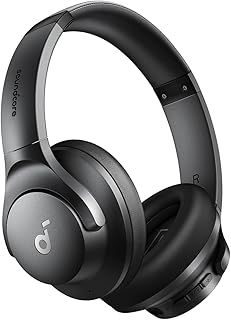
- ✓Hybrid ANC at a budget-friendly price point, delivering solid noise reduction for the cost
- ✓40-hour battery life with ANC on, outlasting many premium competitors at higher price points
- ✓Custom EQ via the Soundcore app allows you to adjust the sound profile to your taste
- ✓Fast charging via USB-C gives 4 hours of playback from just a 5-minute charge
- ✕Plastic construction feels less premium and may not withstand drops as well as metal-framed alternatives
- ✕Microphone quality for calls drops noticeably in windy or moderately noisy environments
- ✕Ear cushions can cause warmth buildup during summer or prolonged wear sessions