Are you curious about what a B Tech degree really means and how it can shape your future? Whether you’re choosing your career path or exploring new options, understanding B Tech is key to making the right decision.
This article will break down everything you need to know about B Tech in simple terms, helping you see why it might be the perfect fit for your goals. Keep reading to discover how this degree can open doors to exciting opportunities and set you on a path to success.
B Tech Degree Basics
The B Tech degree is a popular choice for students aiming to build a strong foundation in engineering and technology. Understanding its basics helps you make informed decisions about your education and career path. Let’s break down what this degree involves and what you need to qualify for it.
What B Tech Stands For
B Tech stands for Bachelor of Technology. It is an undergraduate academic degree focused on engineering and technological disciplines. The degree equips you with practical skills and theoretical knowledge to solve real-world technical problems.
Unlike purely theoretical courses, B Tech programs emphasize hands-on experience. This approach prepares you for roles in industries like IT, manufacturing, and construction. Have you thought about which engineering field excites you the most?
Duration And Structure
The B Tech degree usually lasts four years, divided into eight semesters. Each semester includes a mix of lectures, labs, and projects. This structure allows you to gradually build expertise and apply what you learn.
During the course, you’ll study core subjects along with electives that match your interests. Many programs also include internships or industrial training. These experiences give you a taste of the professional world before you graduate.
Eligibility Criteria
To join a B Tech program, you typically need to have completed your higher secondary education (12th grade) with a focus on science subjects like Physics, Chemistry, and Mathematics. Most colleges require a minimum percentage in these subjects.
Entrance exams are common, so prepare well if you want to secure a seat. Some universities also consider your board exam scores or have their own admission tests. Are you ready to meet these requirements and take the next step in your engineering journey?
Popular B Tech Specializations
Choosing the right B Tech specialization can shape your career path and open doors to exciting opportunities. Each field offers unique challenges and skills, so understanding what each specialization entails is crucial. Let’s look at some of the most popular B Tech specializations that attract students worldwide.
Computer Science
Computer Science is perfect if you enjoy coding and problem-solving. It covers software development, algorithms, and data structures. With technology evolving rapidly, your skills here can lead to careers in AI, cybersecurity, and app development.
I once met a student who started with just a curiosity for gaming and ended up creating apps used by thousands. What could you build if you mastered programming?
Mechanical Engineering
This specialization deals with designing, analyzing, and manufacturing mechanical systems. It’s hands-on and involves understanding machines, engines, and robotics. If you like figuring out how things work, mechanical engineering offers practical challenges every day.
Imagine working on the next generation of electric vehicles or robots—your ideas could power the future.
Electrical Engineering
Electrical Engineering focuses on electricity, electronics, and electromagnetism. It’s about designing circuits, power systems, and communication devices. This field is essential in industries ranging from energy to telecommunications.
Have you thought about how your smartphone or the power grid works? This specialization puts you at the heart of those technologies.
Civil Engineering
Civil Engineering involves planning, designing, and constructing infrastructure like roads, bridges, and buildings. It’s ideal if you want to create tangible structures that improve communities. Your work can directly impact how people live and move.
Think about the bridges you cross daily—what if you were the one who built them?
Electronics And Communication
This field blends electronic devices with communication technologies. You’ll learn about signal processing, embedded systems, and wireless networks. It’s vital for developing gadgets and communication systems that keep us connected.
Consider how important fast internet and mobile phones are—this specialization lets you be part of that innovation.
Admission Process
The admission process for a B Tech program is designed to identify candidates who are well-prepared and motivated to pursue engineering studies. Understanding each stage can help you plan better and reduce the stress of applying. Let’s break down the key steps you need to focus on to secure your spot in a B Tech course.
Entrance Exams
Most B Tech admissions require you to clear an entrance exam. Popular exams include JEE Main, JEE Advanced, and state-level tests like MHT-CET or KCET. These exams test your knowledge in Physics, Chemistry, and Mathematics, so your preparation should be focused on these subjects.
Did you know some colleges also conduct their own entrance tests? If you target such institutions, checking their specific exam patterns early can give you an edge. Preparing with previous years’ question papers can boost your confidence and improve your speed.
Merit-based Selection
Some colleges offer admission purely based on your marks in the qualifying exam, such as your 12th-grade board results. This means your academic performance right now plays a big role. If your marks are consistently good, you stand a better chance of getting admission through merit lists.
Always verify the minimum cutoff marks set by the colleges you’re interested in. If your scores are close to the cutoff, consider applying to multiple colleges to increase your options. Keeping track of merit lists published online will help you stay updated on your chances.
Counseling And Seat Allocation
Once you clear entrance exams or qualify through merit, counseling is the next big step. During counseling, you select your preferred colleges and courses based on your rank and availability. It’s crucial to fill your choices carefully, balancing your dream colleges with safe options.
Seat allocation usually happens in rounds, so if you don’t get your first choice initially, you can try again in subsequent rounds. Keep all your documents ready and double-check your application details to avoid last-minute hiccups. Have you thought about how you’ll prioritize your choices if multiple offers come your way?
Curriculum And Subjects
The curriculum of a B Tech degree is designed to build a strong foundation in engineering principles while also offering room for specialization. It carefully balances theory with hands-on experience, ensuring you gain both knowledge and practical skills.
Core Engineering Courses
Core courses cover essential topics like mathematics, physics, and computer programming. They also include fundamental engineering subjects such as:
- Thermodynamics
- Electrical Circuits
- Mechanics
- Data Structures
- Material Science
These subjects prepare you to understand complex systems and solve engineering problems effectively.
Practical Labs And Workshops
Labs and workshops are where theory meets practice. You’ll work with real equipment, run experiments, and create projects that reflect industry standards.
For example, in an electronics lab, you might design a circuit from scratch and test its functionality. Such experiences help you develop problem-solving skills and confidence in handling technical challenges.
Electives And Minor Subjects
Electives allow you to explore areas beyond your core specialization. You can choose from topics like artificial intelligence, renewable energy, or even management courses.
Minor subjects help broaden your skill set, making you more versatile in the job market. Think about what interests you the most—this is your chance to tailor your education to your career goals.
Skills Gained During B Tech
B Tech programs build a wide range of skills vital for engineering careers. Students learn beyond theory. They gain hands-on experience that sharpens their abilities. These skills prepare graduates to solve real-world challenges. Many of these skills are valuable in various industries.
Technical Skills
B Tech students develop strong technical knowledge in their field. They learn to use modern tools and software. Practical labs and projects improve their coding and designing skills. Understanding engineering principles helps in creating effective solutions. These technical skills form the backbone of their career.
Problem Solving
Problem solving is a key focus during B Tech studies. Students face complex tasks that need clear thinking. They learn to analyze problems and find logical solutions. Working on projects teaches them to handle challenges step-by-step. This skill is useful in any job or situation.
Teamwork And Communication
Students often work in groups on assignments and projects. This builds teamwork skills essential for the workplace. They learn to share ideas and listen to others. Communication skills improve through presentations and reports. Good teamwork and communication help in achieving common goals smoothly.

Credit: www.youtube.com
Career Opportunities After B Tech
Career opportunities after B Tech are diverse and promising. Graduates gain skills in technology and problem-solving. These skills open doors in many fields. The demand for engineers remains strong worldwide. Many paths lead to rewarding jobs or further studies.
Job Profiles
- Software Developer: Create and maintain software applications.
- Mechanical Engineer: Design and improve mechanical systems.
- Civil Engineer: Plan and supervise construction projects.
- Data Analyst: Interpret data to help business decisions.
- Network Engineer: Manage and secure computer networks.
- Quality Analyst: Test products to ensure high standards.
- Project Manager: Lead projects and coordinate teams.
Industries Hiring B Tech Graduates
- Information Technology: Software, hardware, and IT services.
- Manufacturing: Automobiles, electronics, and machinery.
- Construction: Infrastructure and real estate development.
- Telecommunications: Network setup and maintenance.
- Energy: Power plants and renewable energy sectors.
- Finance: Tech roles in banking and insurance.
- Healthcare: Medical devices and health technology.
Higher Studies And Certifications
Higher education improves knowledge and skills. Many choose M Tech or MBA after B Tech. Certifications boost career growth and credibility.
- Certified Data Scientist
- Project Management Professional (PMP)
- Cloud Computing Certifications (AWS, Azure)
- Cybersecurity Certifications
- Six Sigma and Lean Management
These options help graduates stay competitive and skilled. Lifelong learning is key in technology fields.
Top Colleges For B Tech
Choosing the right college is key for a successful B Tech journey. Colleges shape your skills and future opportunities. Here are some top options in different categories for B Tech aspirants.
Government Institutes
- Indian Institutes of Technology (IITs) – Known for rigorous academics and research.
- National Institutes of Technology (NITs) – Offers quality education with strong industry links.
- Indian Institute of Information Technology (IIITs) – Focuses on information technology and engineering.
- Delhi Technological University (DTU) – Renowned for engineering and technology courses.
- Jadavpur University – Combines strong academics with affordable fees.
Private Universities
- Vellore Institute of Technology (VIT) – Popular for placements and diverse courses.
- Birla Institute of Technology and Science (BITS Pilani) – Known for flexible learning and research.
- Amity University – Offers modern infrastructure and industry exposure.
- Manipal Institute of Technology – Provides global curriculum and practical training.
- Shiv Nadar University – Focuses on innovation and interdisciplinary studies.
International Options
- Massachusetts Institute of Technology (MIT), USA – World leader in technology education.
- Stanford University, USA – Strong in engineering and entrepreneurship.
- University of Cambridge, UK – Offers cutting-edge research opportunities.
- National University of Singapore (NUS) – Top-ranked Asian university for engineering.
- Technical University of Munich, Germany – Known for practical engineering education.
Credit: medium.com
B Tech Vs Other Engineering Degrees
Choosing the right engineering degree can shape your career path. B Tech stands out but often gets compared to other degrees. Understanding the differences helps in making the right choice. Each degree has unique features and benefits. Let’s explore how B Tech compares to BE, Diploma, and Integrated courses.
B Tech Vs Be
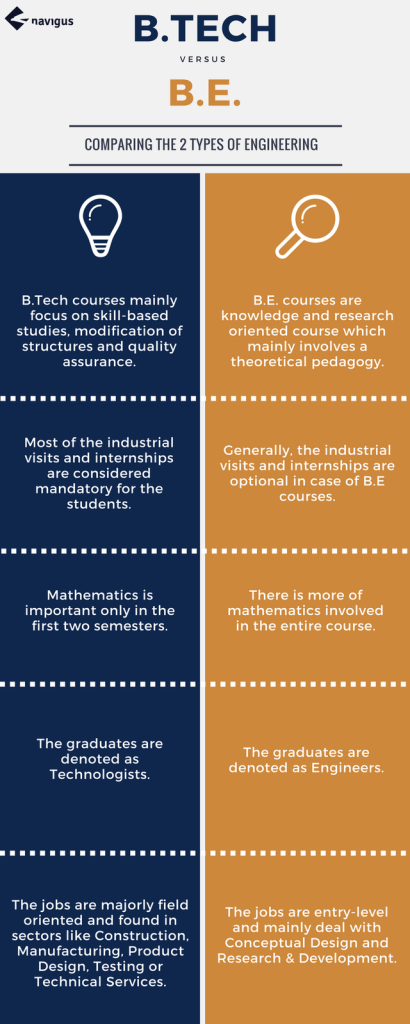
B Tech and BE both focus on engineering education. The curriculum in B Tech is more practical and skill-oriented. BE tends to be more theoretical with emphasis on concepts. B Tech programs are usually offered by technical universities. BE courses may be available at traditional universities. Both degrees last four years and cover similar subjects. B Tech graduates often find it easier to adapt to industry needs. BE graduates may have a stronger foundation in theory. Employers value both degrees but prefer B Tech for hands-on skills.
B Tech Vs Diploma
Diploma courses are shorter, usually three years after 10th grade. B Tech requires completion of 12th grade with science subjects. Diploma focuses on practical knowledge for technicians. B Tech offers deeper engineering knowledge and design skills. Diploma holders can enter B Tech through lateral entry. B Tech opens more job opportunities and higher salaries. Diploma suits those wanting quick entry into the workforce. B Tech is better for long-term career growth in engineering.
B Tech Vs Integrated Courses
Integrated courses combine undergraduate and postgraduate studies. They usually last five years and award dual degrees. B Tech is a standalone undergraduate program lasting four years. Integrated courses save time for students aiming for a master’s degree. B Tech allows flexibility to choose postgraduate options later. Integrated programs provide a smooth transition to advanced studies. Both paths prepare students for research or industry roles. Choosing depends on career goals and study preferences.
Tips For Success In B Tech
Success in a B Tech program requires more than just attending lectures and passing exams. It demands smart strategies that help you absorb knowledge, apply skills, and build a professional network. Here are practical tips to help you excel in your B Tech journey.
Effective Study Habits
Develop a study routine that fits your natural rhythm. Some students focus better in the morning, while others are night owls. Identify your peak concentration times and schedule tough subjects accordingly.
Break down complex topics into smaller parts. Use diagrams, flowcharts, or flashcards to visualize concepts. This makes revision faster and helps retain information longer.
Don’t just memorize formulas—understand their applications. Ask yourself how a theory works in real-life scenarios. This approach makes problem-solving easier during exams and projects.
Internships And Projects
Hands-on experience is crucial. Seek internships even if they are unpaid or part-time. Real-world exposure teaches you skills that textbooks can’t provide, like teamwork and meeting deadlines.
Choose projects that challenge you. For example, building a small app or working on robotics can deepen your technical knowledge. Document your work carefully—it will be valuable during job interviews.
Balance your time between academics and projects. Overcommitting might affect your grades, while under-involvement limits your practical learning. How can you prioritize tasks without burning out?
Networking And Mentorship
Connect with seniors, professors, and industry professionals. They can offer guidance on career paths and technical doubts. Attend seminars and workshops to meet people who share your interests.
Find a mentor who understands your goals and challenges. Their advice can help you avoid common mistakes and stay motivated. Sometimes, a single conversation can change your perspective on a tough subject or career decision.
Use online platforms like LinkedIn to expand your network. Join groups related to your specialization and participate in discussions. Are you actively reaching out or waiting for opportunities to come to you?
Credit: www.facebook.com
Frequently Asked Questions
What Is A B Tech Degree?
B Tech stands for Bachelor of Technology. It is an undergraduate degree in engineering and technology. The course duration is usually four years. It focuses on practical and theoretical knowledge in various engineering fields.
How Is B Tech Different From B.e. ?
B Tech emphasizes practical applications and industry skills. B. E. (Bachelor of Engineering) is more theoretical and research-oriented. Both degrees are equivalent and recognized globally. The curriculum may vary slightly depending on the university.
What Are The Popular B Tech Specializations?
Popular B Tech specializations include Computer Science, Mechanical, Civil, Electronics, and Electrical Engineering. These fields offer diverse career opportunities in technology and development sectors. Students can choose based on their interest and industry demand.
What Career Options Does B Tech Offer?
B Tech graduates can work as engineers, developers, consultants, or researchers. They can join IT companies, manufacturing, construction, or government sectors. Higher studies like M. Tech or MBA can enhance career growth.
Conclusion
B Tech offers a solid foundation in engineering principles. It prepares students for diverse career paths in technology. Graduates can work in software, hardware, or even research fields. The degree helps build problem-solving skills. You’ll learn to design, innovate, and improve systems.
Choose B Tech for a rewarding future in engineering. It’s a smart step towards exciting job opportunities. With dedication, you can achieve success in the tech world. Remember, education opens doors to new possibilities. Pursue your passion and make a difference in society.
Explore, learn, and grow with B Tech.