What is Data Annotation Tech: Unlocking AI’s Hidden Power
Have you ever wondered how machines learn to recognize objects, understand speech, or even read your handwriting? The secret behind this smart learning is something called data annotation tech.
It’s the invisible helper that turns raw information into valuable insights. If you want to know how this process works and why it matters to your everyday life, keep reading. By the end, you’ll see how data annotation tech is shaping the future—and why it should matter to you.

Credit: paidfromsurveys.com
Data Annotation Tech Basics
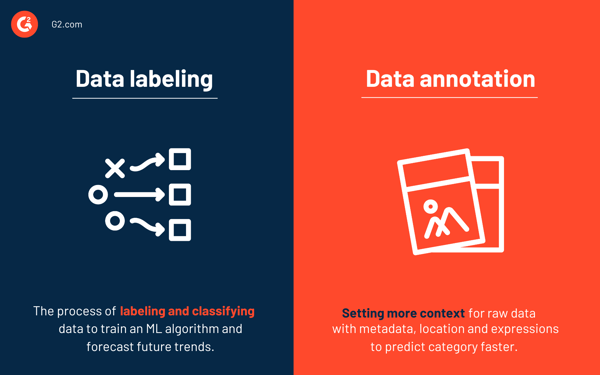
Understanding the basics of data annotation tech is essential if you want to grasp how machines learn to understand information like humans do. Data annotation is about labeling or tagging data so that AI systems can recognize and make sense of it. This process turns raw data into something meaningful and usable for training smart algorithms.
Types Of Data Annotation
Data annotation comes in several forms, each suited for different types of data. Here are some common types:
- Text Annotation:Adding labels to words, phrases, or sentences to identify sentiment, entities, or parts of speech.
- Image Annotation:Drawing boxes or outlines around objects in pictures to help AI detect and classify them.
- Audio Annotation:Tagging sounds or speech to recognize words, emotions, or background noises.
- Video Annotation:Combining image and audio tagging over time to help AI understand movement and context.
Each type requires different tools and skills, so it’s important to pick the right annotation method for your project’s goals.
Role In Ai Development
Data annotation is the foundation of effective AI development. Without well-labeled data, AI models struggle to learn accurately or make reliable predictions. Think about teaching a child to identify animals; you wouldn’t just show random pictures without naming them. Similarly, AI needs clear examples to understand what it’s looking at or listening to.
You might wonder how much impact this really has. In reality, the quality of your annotated data directly affects the AI’s performance. Poor annotations can lead to mistakes, while precise labels improve accuracy and trustworthiness.
When you work on data annotation, you shape the AI’s ability to solve real-world problems. So, what kind of data are you ready to label to make smarter machines?

Credit: www.reddit.com
Key Techniques And Tools
Understanding the key techniques and tools in data annotation tech is essential for anyone working with machine learning or AI projects. The way you annotate data directly affects the quality of your model’s training and its eventual performance. Let’s look at the main approaches and some popular platforms that can help you get the job done efficiently.
Manual Vs Automated Annotation
Manual annotation involves people labeling data by hand. This method is highly accurate because humans can understand context and nuances that machines might miss. However, it can be time-consuming and costly, especially with large datasets.
Automated annotation uses software algorithms to label data automatically. It’s much faster and cheaper but can introduce errors if the algorithm isn’t well-trained. Sometimes, combining both methods works best—automated tools can handle the bulk, and humans can review and correct errors.
Have you considered how much accuracy you really need? If your project demands precision, manual review might be unavoidable. But if speed is crucial, automated tools can save hours or even days.
Popular Annotation Platforms
Several platforms offer powerful tools to help with data annotation. Here are a few widely used ones:
- Labelbox:A user-friendly platform that supports image, video, and text annotation with collaboration features for teams.
- SuperAnnotate:Offers automated annotation options alongside manual tools, ideal for complex image and video projects.
- Amazon SageMaker Ground Truth:Combines human labeling with machine learning to reduce costs and improve accuracy over time.
- Prodigy:A tool focused on text annotation with an active learning loop, making it efficient for natural language processing tasks.
Choosing the right platform depends on your data type, budget, and the scale of your project. Do you need a tool that integrates smoothly with your existing workflow? Or one that prioritizes collaboration across a remote team?
Impact On Ai Accuracy
The impact of data annotation technology on AI accuracy is significant and often underestimated. Accurate annotation directly influences how well AI systems understand and interpret data. Without precise labeling, even the most advanced algorithms can falter, leading to flawed predictions and decisions.
Improving Machine Learning Models
Machine learning models rely heavily on the quality of their training data. When data annotation is thorough and consistent, models learn to recognize patterns more effectively.
Imagine teaching a child new words; if the words are mixed up or mislabeled, learning becomes confusing. Similarly, clean and well-annotated data helps your AI “learn” correctly from the start.
This improved learning boosts accuracy, reduces errors, and enhances the model’s ability to generalize to new data.
Handling Complex Data Sets
Complex data sets, such as images, videos, or natural language, require detailed and nuanced annotation. Simple tags won’t suffice here; you need precise labeling to capture context and subtle differences.
For example, annotating medical images demands pinpoint accuracy to help AI detect anomalies. If annotations miss details, the AI’s predictions can be dangerously off.
Good annotation tools and skilled annotators make handling these complex data sets manageable, directly improving AI’s reliability and trustworthiness.
Credit: learn.g2.com
Challenges In Data Annotation
Data annotation tech faces several challenges that impact its effectiveness. These hurdles can slow down projects and affect the final results. Understanding these challenges helps in finding better ways to handle data annotation.
Maintaining Quality And Consistency
Ensuring high-quality data labels is tough. Different annotators may interpret data differently. This causes inconsistency in the labeled data. Quality checks require extra time and resources. Mistakes in annotation reduce the accuracy of AI models. Clear guidelines and regular training can help improve consistency.
Scalability Issues
Scaling data annotation to handle large datasets is difficult. More data means more annotators or advanced tools. Managing a growing team brings coordination problems. Automated tools may not always match human accuracy. Balancing speed and precision is a constant challenge. Efficient workflows and hybrid approaches help manage scalability.
Future Trends In Annotation
Data annotation technology is evolving rapidly. Its future holds exciting changes that will improve accuracy and speed. These changes will help machines learn better and faster. The future trends focus on blending human skills with AI power. They also include new fields where annotation plays a key role. Understanding these trends helps businesses prepare for what lies ahead.
Ai-assisted Annotation
AI-assisted annotation uses machine learning to support human annotators. It reduces manual work by suggesting labels and corrections. This technology speeds up the annotation process significantly. It also improves consistency across large datasets. Annotators can focus on complex cases while AI handles routine tasks. This partnership boosts productivity and data quality. AI tools keep learning from human feedback to get smarter.
Expanding Use Cases
Data annotation is growing beyond traditional fields like image and text labeling. New industries now rely on annotated data for better insights. Some emerging areas include:
- Healthcare: Annotating medical images for diagnosis support
- Autonomous vehicles: Labeling sensor data to improve navigation
- Retail: Analyzing customer behavior through video annotation
- Robotics: Teaching machines to recognize objects and actions
These expanding use cases demand more precise and varied annotation techniques. The rise in demand drives innovation and new tool development. This growth will shape how data annotation technology evolves in the future.
Frequently Asked Questions
What Is Data Annotation In Technology?
Data annotation in technology refers to the process of labeling data. It helps machine learning models understand and interpret information. By assigning labels to raw data like images, videos, or text, algorithms can learn patterns. This process is crucial for improving AI accuracy and functionality.
Why Is Data Annotation Important?
Data annotation is vital for machine learning and AI development. It ensures accurate model predictions by providing labeled examples for training. High-quality annotation enhances the model’s ability to recognize patterns, leading to reliable outputs. It’s a foundational step in creating effective AI systems.
How Does Data Annotation Work?
Data annotation works by adding metadata to raw data. Annotators manually label images, videos, or text according to specific criteria. This labeled data trains algorithms to recognize patterns and make predictions. Various tools and techniques are used to streamline the annotation process.
What Are Common Data Annotation Types?
Common data annotation types include image, text, and video labeling. Image annotation involves bounding boxes or semantic segmentation. Text annotation includes sentiment analysis or named entity recognition. Video annotation can include object tracking or action recognition. Each type serves different AI and machine learning needs.
Conclusion
Data annotation tech helps computers learn from data. It labels information clearly and simply. This process improves AI and machine learning accuracy. Many industries use data annotation to build smarter systems. Understanding its role can guide better tech choices. Clear, well-annotated data leads to stronger results.
This tech shapes how machines understand the world. Keep data annotation in mind for future AI projects. It’s a key step in digital progress.

Similar Posts